Skip to the main content
SSRN

Transparency by Inquiry

Unveiling Speech Norms in AI Content Moderation

Faculty Associate Niva Elkin-Koren and coauthors introduce transparency-by-inquiry (TbI) as an alternative to the transparency-by-disclosure (TbD) model they see in legislation…

Feb 2, 2026
Wharton Accountable AI Forum

When AI Broke the Law

AI "breaks" the law, in that the legal structures governing the technology fail to operate in clear, consistent, and principled ways.

Feb 1, 2026
AI as Normal Technology

Fact checking Moravec's paradox

The famous aphorism is neither true nor useful

Faculty Associate Arvind Narayanan contends that Moravec's paradox is more a statement of AI technologists' values than of fact.

Jan 29, 2026
Jan 29, 2026

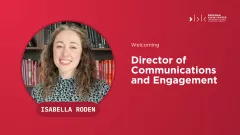
Isabella Roden Joins the Berkman Klein Center as Director of Communications and Engagement

The Berkman Klein Center for Internet & Society at Harvard University is pleased to welcome Isabella Roden as its new Director of Communications and Engagement, where she will…

The Harvard Gazette

How AI deepfakes have skirted revenge porn laws

Limits unclear when explicit images of individuals look real, but are digitally generated

In an interview with The Harvard Gazette, Faculty Co-Director Rebecca Tushnet explains the legal difficulties that AI deepfakes present.

Jan 28, 2026

Isabella Roden

Isabella is the Director of Communications and Engagement for the Berkman Klein Center for Internet & Society, where she focuses on expanding BKC…

The New York Times

TikTok Strikes Deal for New U.S. Entity, Ending Long Legal Saga

ByteDance has struck a deal with a group of non-Chinese investors to loosen TikTok's ties to China, alleviating national security concerns relating to the app.

Jan 23, 2026
OONI

Uganda blocked social media following 2026 general election

In a solo-authored report for OONI, Maria Xynou documents the Ugandan Communications Commission's internet shutdown and subsequent social media blocks.

Jan 23, 2026
arXiv

Distinguishing Task-Specific and General-Purpose AI in Regulation

Faculty Associates Andrew Selbst and Solon Barocas and coauthors identify ways that general-purpose AI requires regulatory tools not necessitated by task-specific AI.

Jan 23, 2026
Columbia Law Review

Crime by Tech

Mailyn Fidler tracks laws that criminalize tech-mediated behavior differently than similar behaviors performed without technology.

Jan 22, 2026
Subscribe to